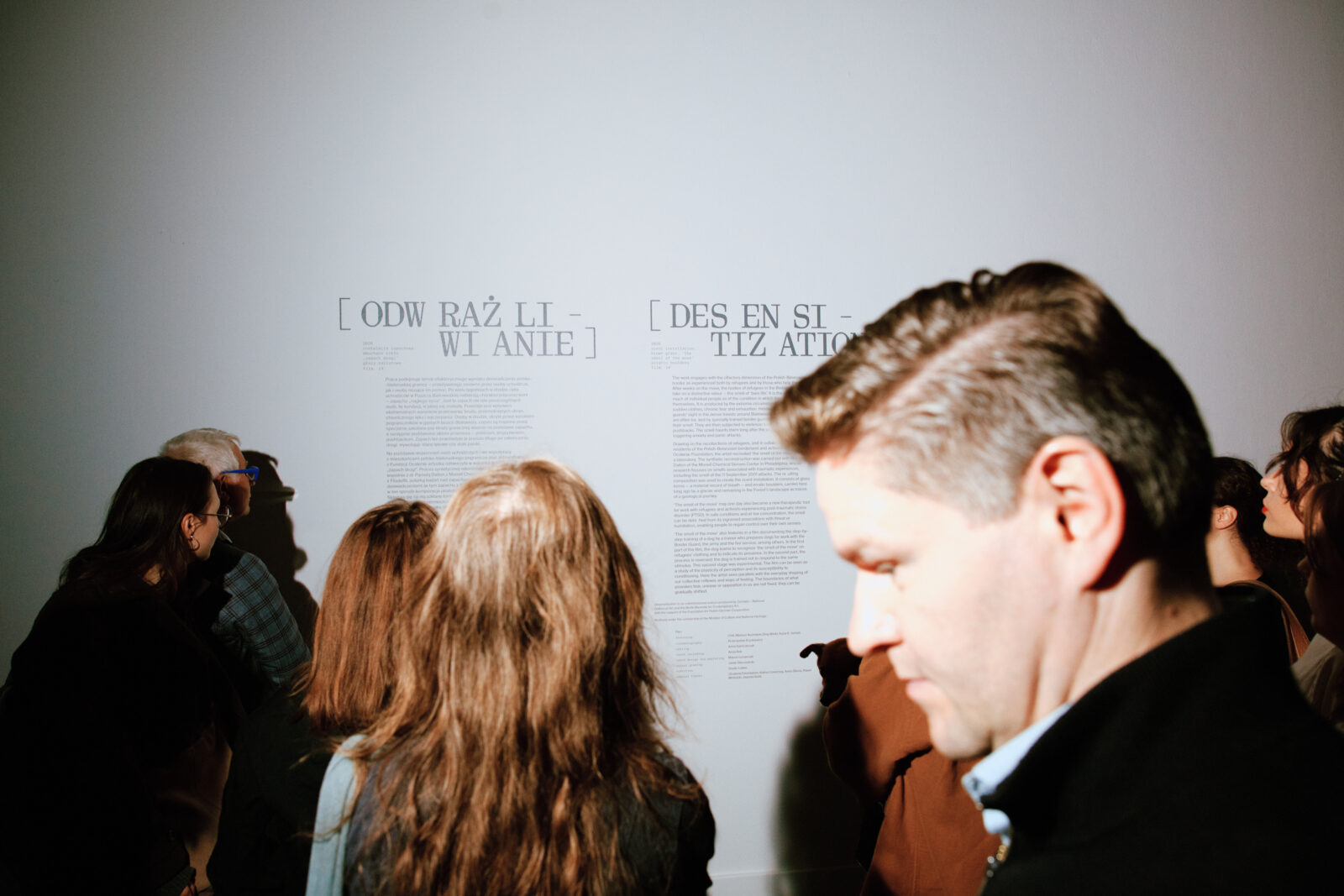
Desensitization
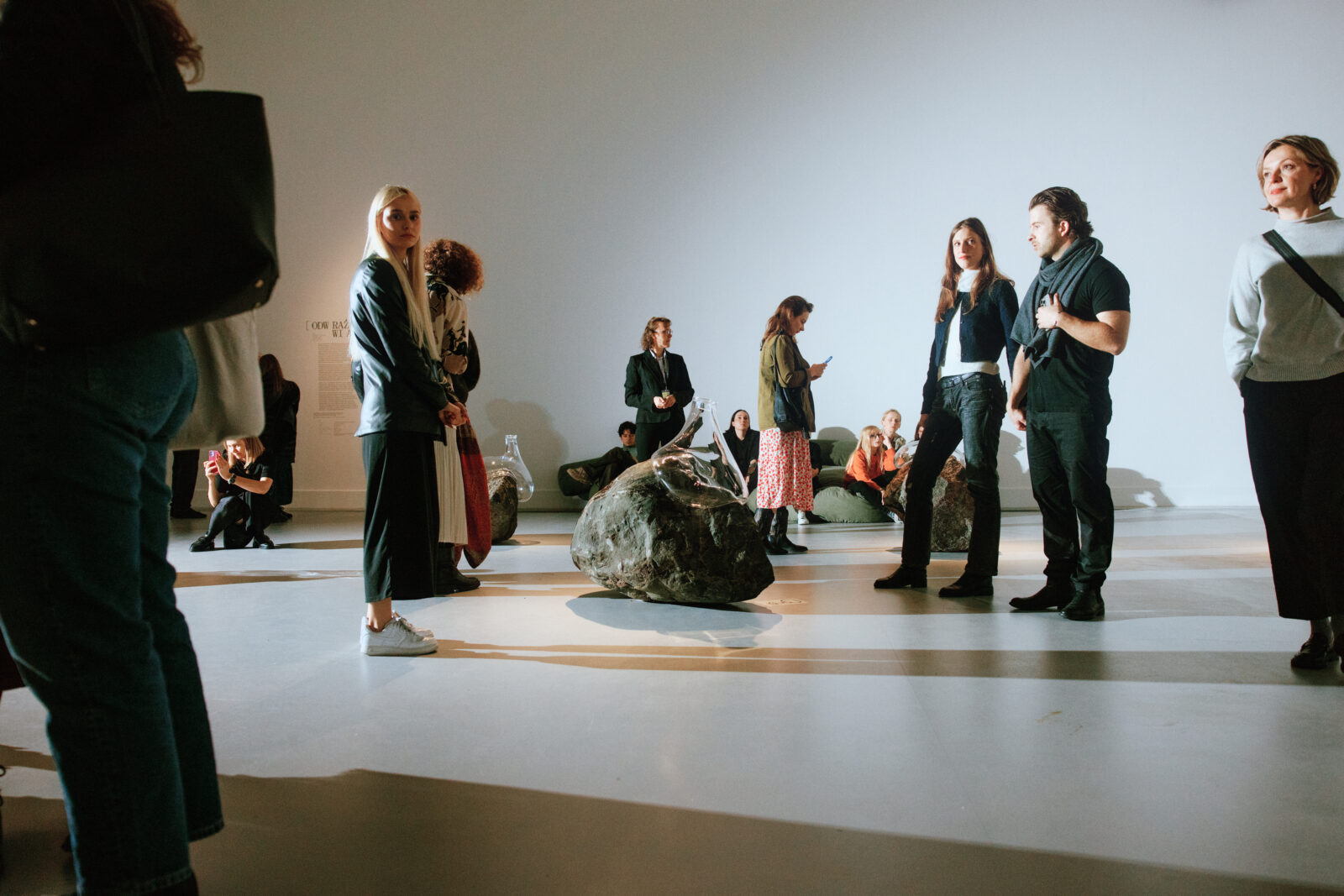
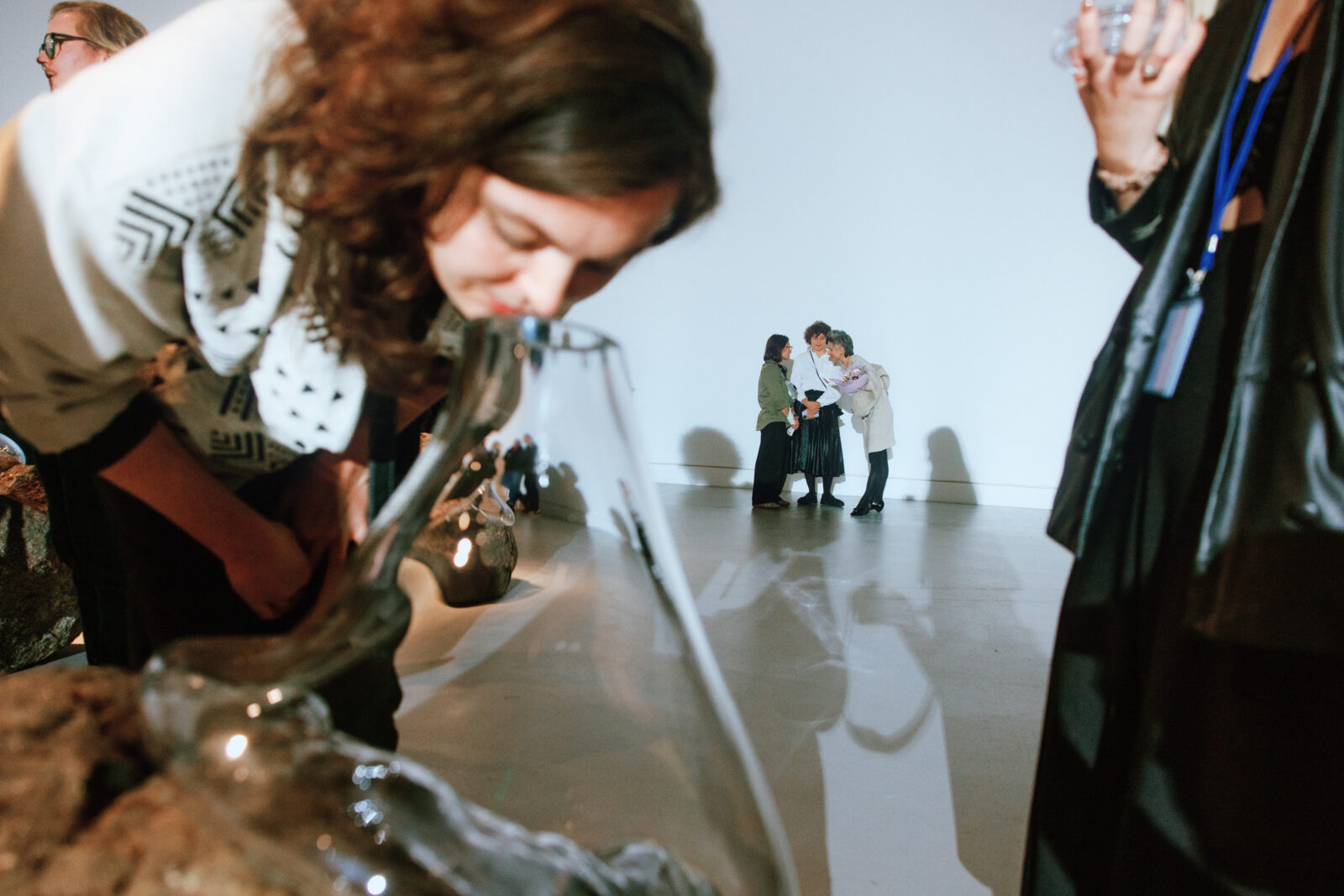
Desensitization explores the politics of smell, trauma-related odors, and the olfactory dimension of experiences of borders. Based on the recollections of people who have crossed the EU borders, and in collaboration with local residents and human rights activists, the artist synthetically reconstructs — in laboratory conditions — the smell of the move. The scent will serve as the basis for an installation: an olfactory archive of border violence, but also as a new tool in PTSD therapy, supporting refugees and activists in regaining control over their senses.
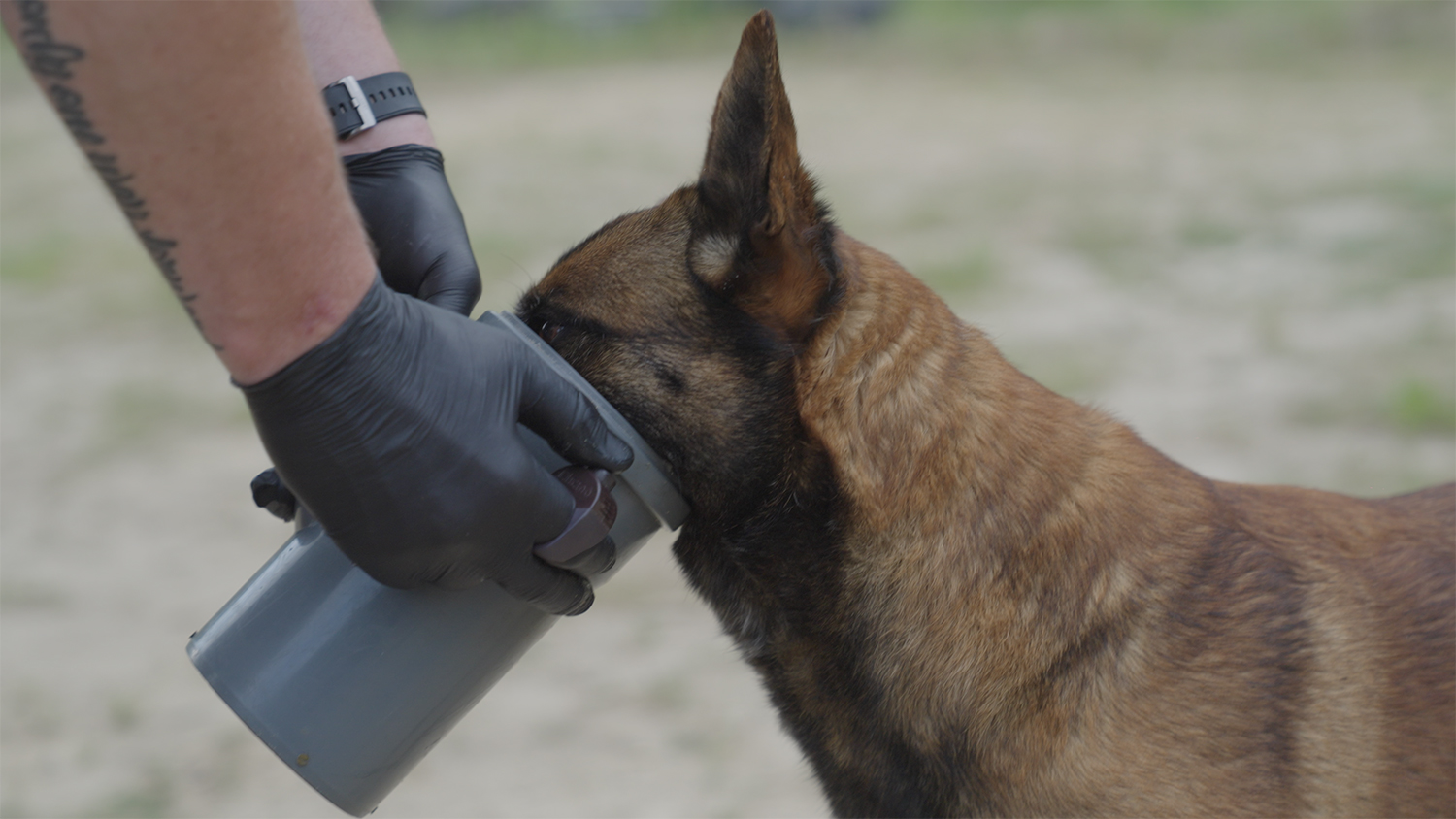
The installation is accompanied by a film, that precisely documents the training of a border service dog. The dog is taught to identify the smell of the move based on the clothing of refugees crossing the EU border — and then, through a carefully reversed procedure, it is trained to stop responding to that same stimulus. The film serves as a near-instructional demonstration of the plasticity of the perceptual system, and more broadly, of the everyday ideological training to which societies are subjected.
Project
Commissioned by:
Zachęta – National Gallery of Art, Warsaw
Berlin Biennale for Contemporary Art
Realized under the scholarship of the Minister of Culture and National Heritage.
Exhibition:
Desensitization, Zachęta–National Gallery of Art, Warsaw (PL)
16.10.2026-10.01.2027
Collaboration
Curator: Katarzyna Kołodziej-Podsiadło
Scent
prof. Pamela Dalton, Monell Chemical Senses Center, Philadelphia
Film
Featuring: Chili (dog); Mariusz Kuzmecki, Dog Work (trainer); Kuba Rudziński (decoy)
Director of Photography: Przemysław Brynkiewicz
Editing: Anna Garncarczyk
Sound recording: Anna Rok
Sound design and mastering: Marcin Lenarczyk
Colour grading: Jarek Sterczewski
Subtitles: Studio Lekko
Special thanks: Ocalenie Foundation, Kalina Czwarnóg, Anna Sikora, Dariusz Jarmolik, Artur Nowak Gocławski, Katarzyna Młyńczak, Anna and Ryszard Karecki, Kasia Kempa, Robert Staroń, Andrzej Wójtowicz, Piotr Wojtuń, Dariusz Gosztyła, Sebastian Urbanek, Tadeusz Rajchel, Paweł Mościcki, Jagoda Szelc
Exhibition architecture: Julia Cieślak
Visual identity: Studio Lekko
Photos: Marek Kita
Desensitization
Olfactory installation: blown glass, the smell of the move, erratic boulders
Film, 14′
Smell of the move
In recent years, the Polish-Belarusian border has become the stage of a multilayered socio-political conflict. As a frontier of the European Union, a contact zone between East and West, and a locus of escalating geopolitical tensions, it has been transformed into a space of violence, repression, and resistance. Migrants from West Asia and Africa reach this border, treating it as a new route into Europe. The institutions of the Polish state, meanwhile, demonstrate their determination to defend the impenetrability of the EU’s borders, turning the area into a closed militarized zone.
Based on the recollections of people who have crossed the Polish-Belarusian border, and in collaboration with local residents and human rights activists, the artist synthetically reconstructs — in laboratory conditions — the smell of the move. After many weeks on the move, refugees’ bodies develop a characteristic odor — the smell of “bare life”. It is not the smell of individual people, but of the condition they have been forced into — a product of extreme survival circumstances: dirt, soaked clothing, chronic fear, and exhaustion.
Hiding from the eyes of soldiers and border guards in the dense forests of Białowieża — a primeval woodland spanning both the Polish and Belarusian sides — refugees are often tracked down by specially trained border patrol dogs, guided primarily by scent. It is then that they are subjected to the most traumatizing forms of violence: beatings, dog attacks, pushbacks. This odor haunts them long after the journey ends, triggering flashbacks, anxiety, and panic attacks.
In collaboration with Professor Pamela Dalton of the Monell Chemical Senses Center in Philadelphia — a pioneer in the study of trauma-related odors, including the scent of 9/11 — the artist has carried out a process of synthetic reconstruction of this smell of the move. The resulting composition serves as the foundation for a scent installation: an olfactory archive of border violence.
And yet, the smell of the move also holds the potential to become something radically different — a new, powerful therapeutic tool, made accessible to both people on the move and activists who accompany them. When applied carefully in PTSD therapy, in low concentrations and under safe conditions, the scent can be detached from its fixed associations with danger or humiliation and redirected toward new ones. The repetitive cycle of trauma is disrupted and neutralized. Its dark origins cease to dominate, and instead contribute to the restoration of agency over one’s own senses.
The olfactory installation is accompanied by the film. It precisely documents, step by step, the training of a border service dog. The dog is taught to identify the smell of the move based on the clothing of refugees crossing the Polish-Belarusian border — and then, through a carefully reversed procedure, it is trained to stop responding to that same stimulus. The film serves as a near-instructional demonstration of the plasticity of the perceptual system, and more broadly, of the everyday ideological training to which societies are subjected. When the senses are subordinated to policies of repression and selection, they easily become tools for constructing a criminal, exclusionary consensus.
The Desensitization project refers to what Achille Mbembe calls necropolitics — a form of governance that manages not life, but death. Borders become spaces where states intentionally maintain inhuman conditions: offering no shelter, yet not allowing people to “officially” die. In this sense, migration policy ceases to function as a system of protection and instead becomes a system of brutal segregation.
What is at stake in Grzywnowicz’s project is not only the exposure of mechanisms of violence, but also the attempt to create the conditions and tools to counter them. It is a threefold act of resistance:
1. it builds a scent archive of exclusion and reveals the sensory dimension of political repression;
2. it demonstrates the techniques used to manipulate the senses in ways that legitimize violence at the borders;
3. it constructs an olfactory tool for trauma healing.
In a place where politics has turned people into traces to be erased, the artist proposes scent as a lasting, indelible proof of existence, and a means of resistance.