Second Nature
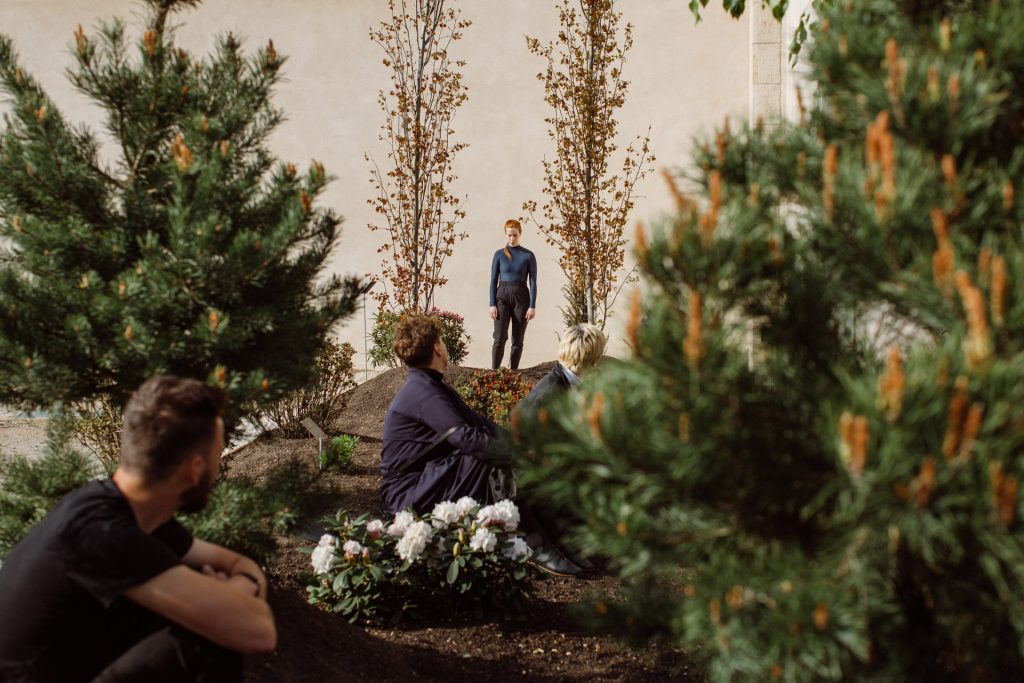
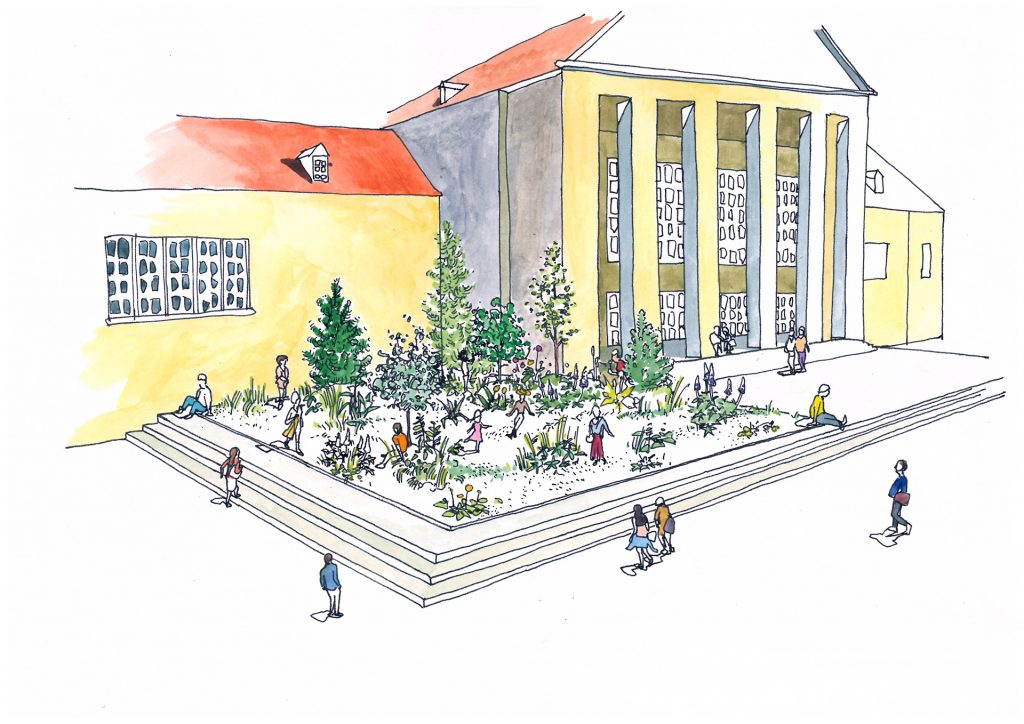
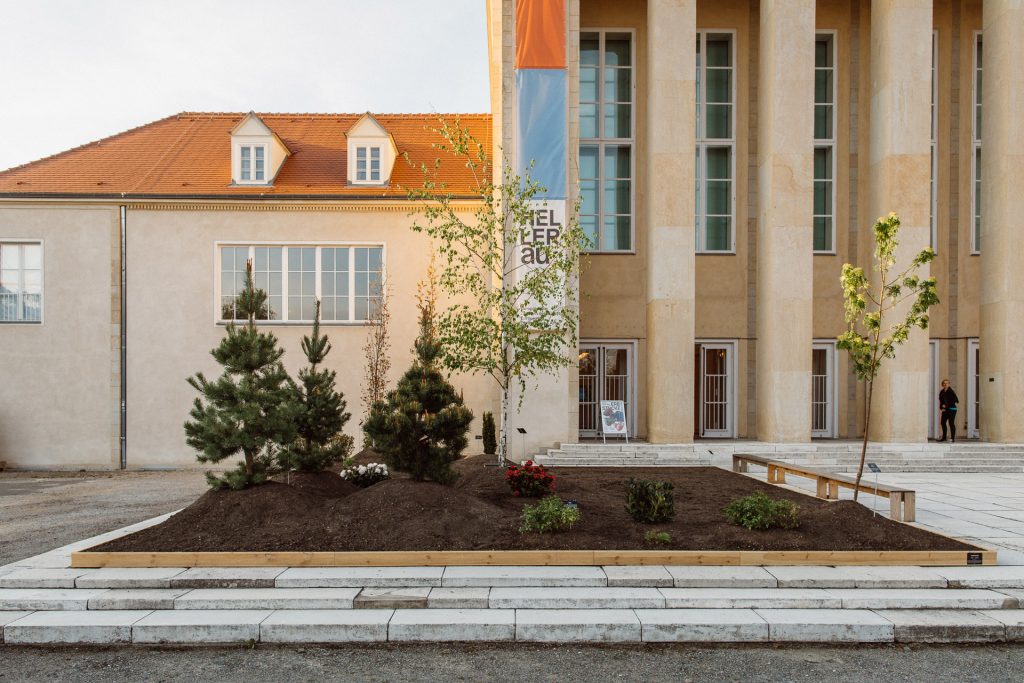
In Second nature landscape is perceived as a living archive in which traces of past events are recorded. This pleasant, fragrant installation, inviting people to spend time in it, only after a while reveals its hidden lower layer. The garden-installation is dedicated to plants that were instruments of violence in the Nazi machine of conquest and extermination and is entirely composed of species that were used as a camouflage, raw material and an involuntary ally.
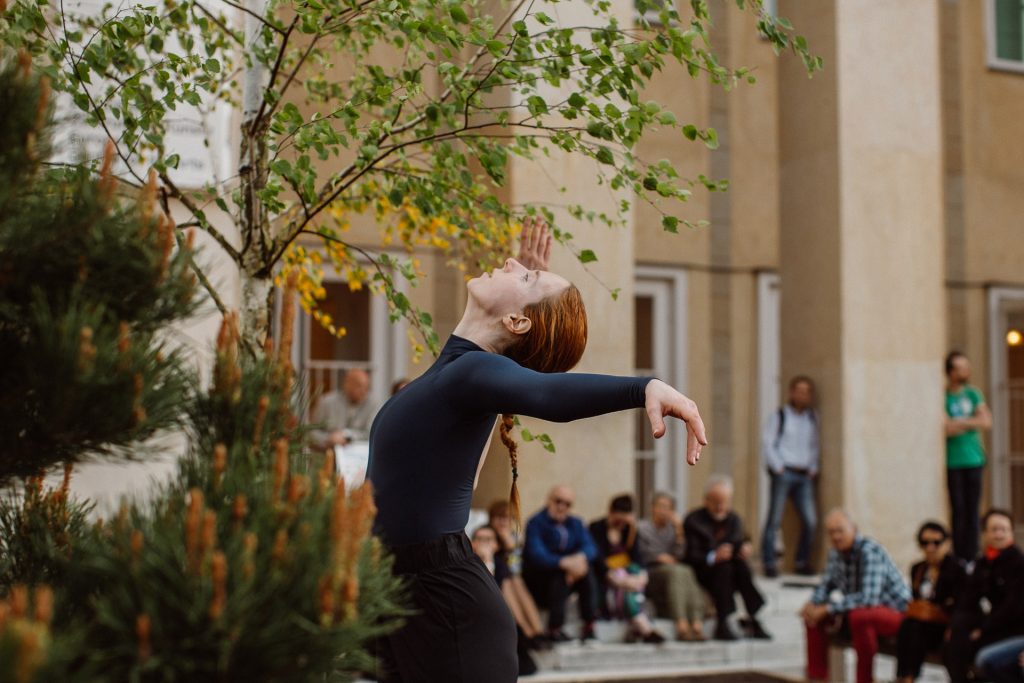
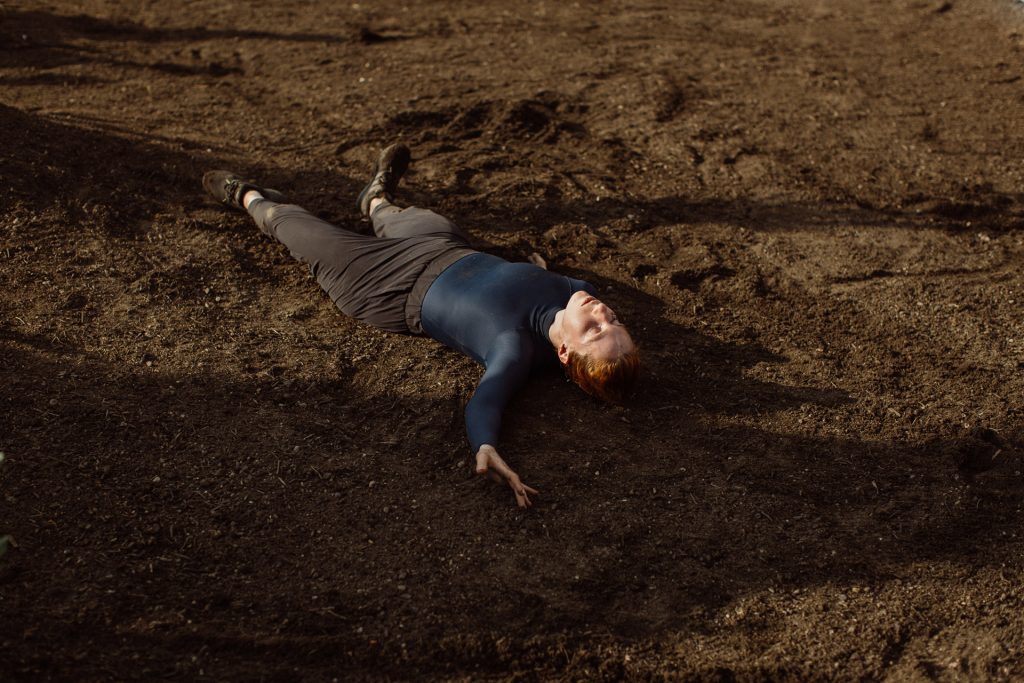
The installation created a space for Agata Siniarska’s performance, which takes as its starting point the work and biography of Pola Nireńska, a choreographer and dancer, a Polish Jewess who – having escaped death herself – lost most of her family in the Holocaust. The solo was performed by the dancer Katarzyna Wolińska.
Second Nature
World premiere: Festival „Erbstücke”, Hellerau – European Center for the Arts, Dresden (DE), 2019.
Temporary Autonomous Zones, Studio Theatre, Warsaw (PL), 2019.
Second Nature – tour: Bucharest (RO), Chisinau (MD), Žilina (SK), Plovdiv (BG), Prague (CZ), 2019.
Collaboration
Choreography: Agata Siniarska
Performance: Kasia Wolińska
Text: Ola Janus
Drawings: Tom Hunter
Photos: Michał Ramus
Installation
Living plants, 60t of soil, drainage system, wooden frame, engraved plates from black anodised aluminium.
Second Nature
Like most human actions, past violence leaves behind many sites that can be read as crime scenes long after all the apparent signs of the events are gone. As ethnobotanist William Balée puts it, landscapes have a history, rather than merely an evolution behind them. And their history sometimes turns them into ‘contaminated landscapes’ – forests, fields and villages of Central and Eastern Europe, non-human witnesses of the atrocities of the XX century.
The environment – despite the way we are used to thinking about it – was not and is not a passive background for historical processes and events. Going beyond the anthropocentric perspective allows us to see nature as an actor, witness and co-participant of history, and landscape to be read as a living archive in which traces of past events are recorded. The Second Nature installation is dedicated to plants that were objects or instruments of violence in the Nazi machine of conquest and extermination. Adopting an environmental perspective, taking into account such aspects as location, landscape, introduces an expanded group of witnesses to the stage. If the Holocaust, according to the will of the Nazis, was to be an ideal crime – without witnesses and without traces – then the environment, like an overlooked yet obvious participant, turns out to be a collection of evidence.
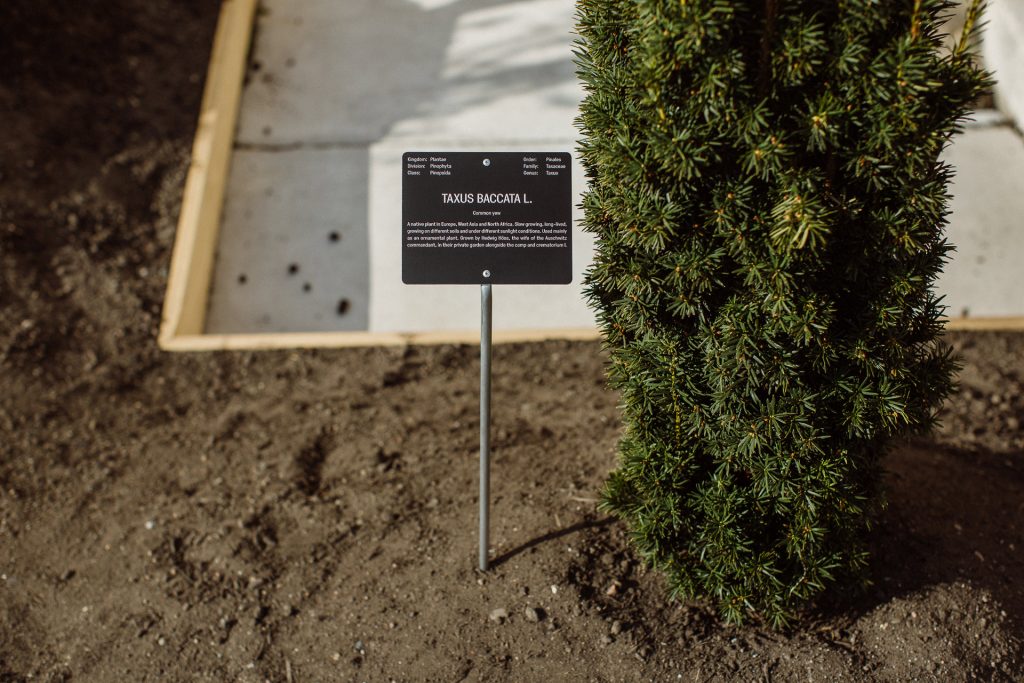
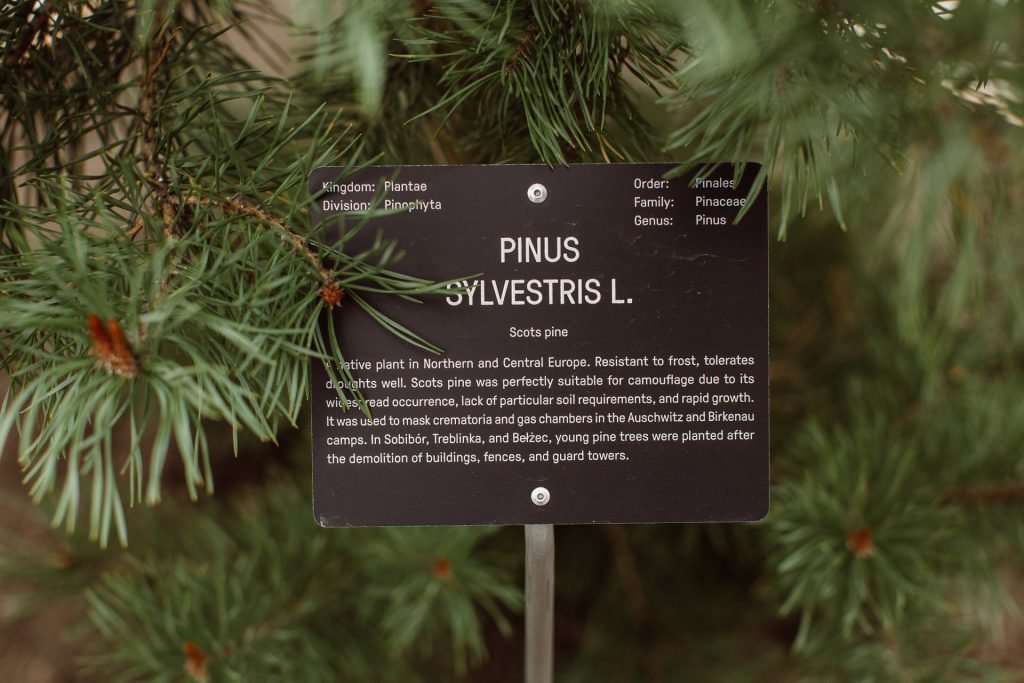
This pleasant, fragrant installation, inviting people to spend time in it, only after a while reveals its hidden lower layer. The garden-installation is entirely composed of plants that were the subject of Nazi practices, in which nature was used as a camouflage, raw material and an involuntary ally: lupins, which were used to conceal places of violence (extermination camps like Treblinka, Bełżec, or mass graves in forests throughout Poland), pines that were planted at the site of the demolished Sobibór camp, or poplars and rowans which were used to cover fragments of the Auschwitz camp. Furthermore, plants that were in Rudolf Höss’s garden in front of his villa in Auschwitz have been used in the installation. The Commander was proud that his wife, Hedwig, had a “flower paradise” there. The stories of the plants are revealed by information plates, which indicate the connection between seemingly innocent classification practices and the exploitation embedded in genocide and ecocide. The work also addresses the politics of nature in museums-memorial sites, which is based on the division of the natural world into “higher” organisms (trees), which are cared for because of their historical value, and “lower” organisms, considered as weeds and intruders and blunted because of their effect on the appearance of the camp. Since 1994 in Auschwitz-Birkenau, the latter has been regularly exposed to Roundup, which is a ‘total herbicide’. This means that it destroys all herbaceous plants in the area. In discussions on the commemoration of the Holocaust sites in Poland, attention is drawn only to aesthetic issues, while the ecological aspect is completely ignored.
The installation created a space for Agata Siniarska’s performance, which takes as its starting point the work and biography of Pola Nireńska, a choreographer and dancer, a Polish Jewess who – having escaped death herself – lost most of her family in the Holocaust. The solo was performed by the dancer Katarzyna Wolińska.