Every song knows its home
In the dark times
Will there also be singing?
Yes, there will also be singing.
About the dark times.
– Bertolt Brecht
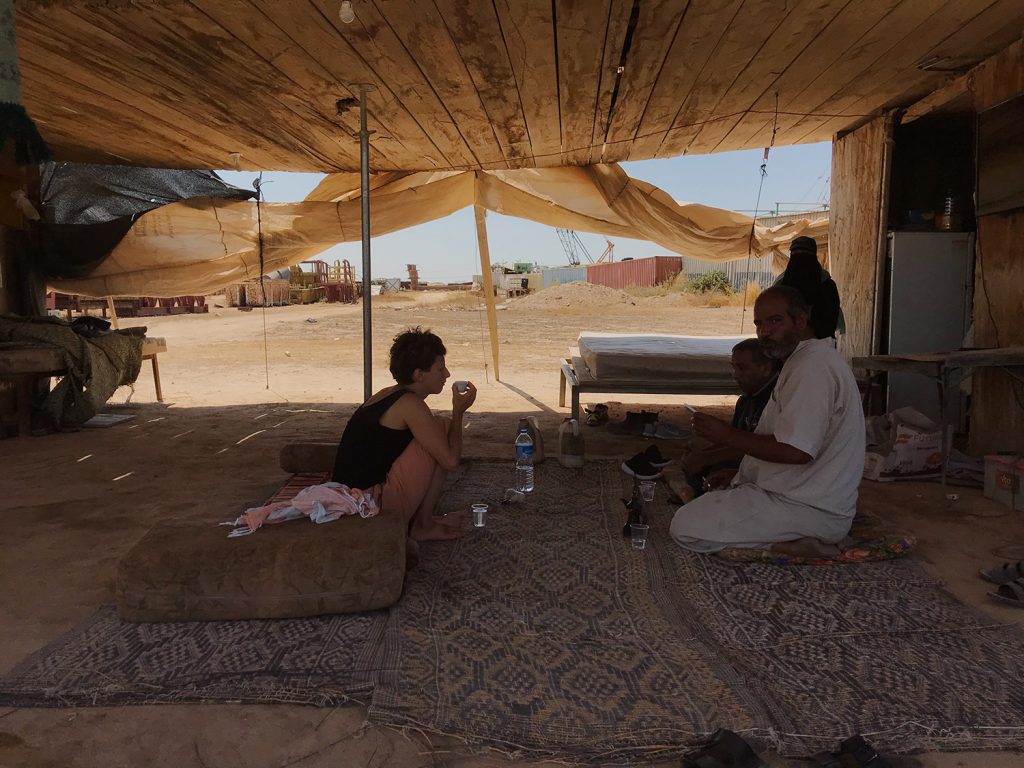
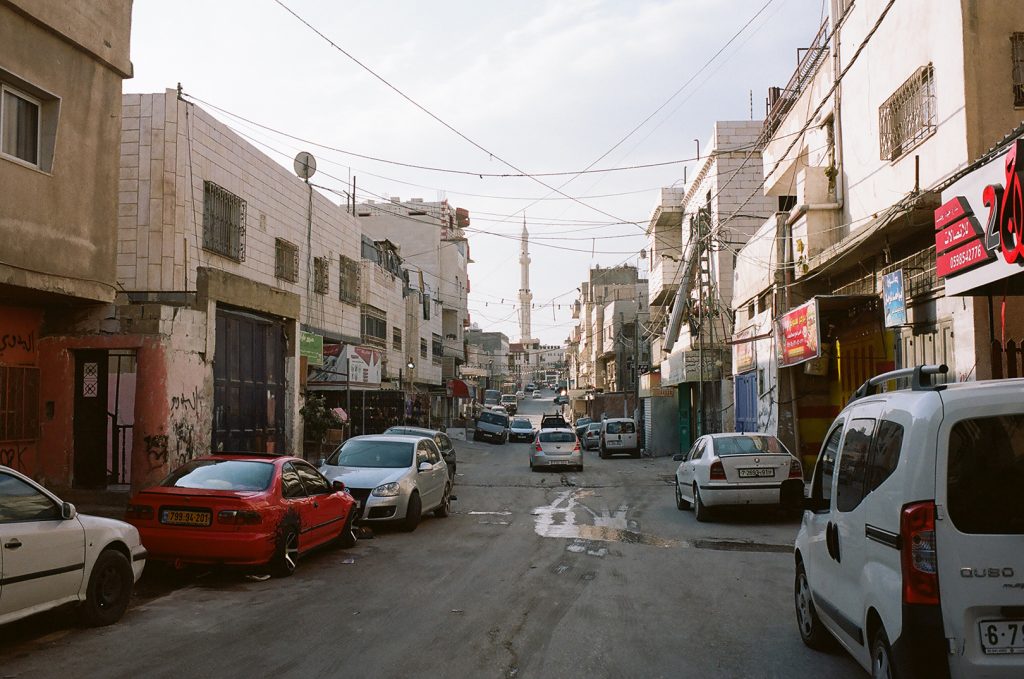
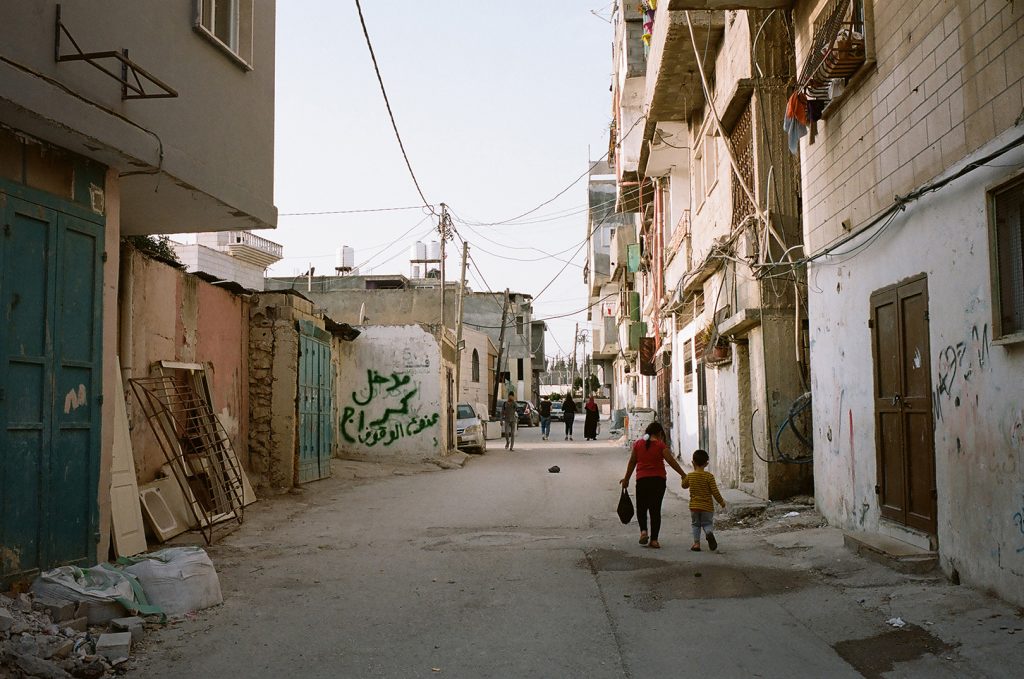
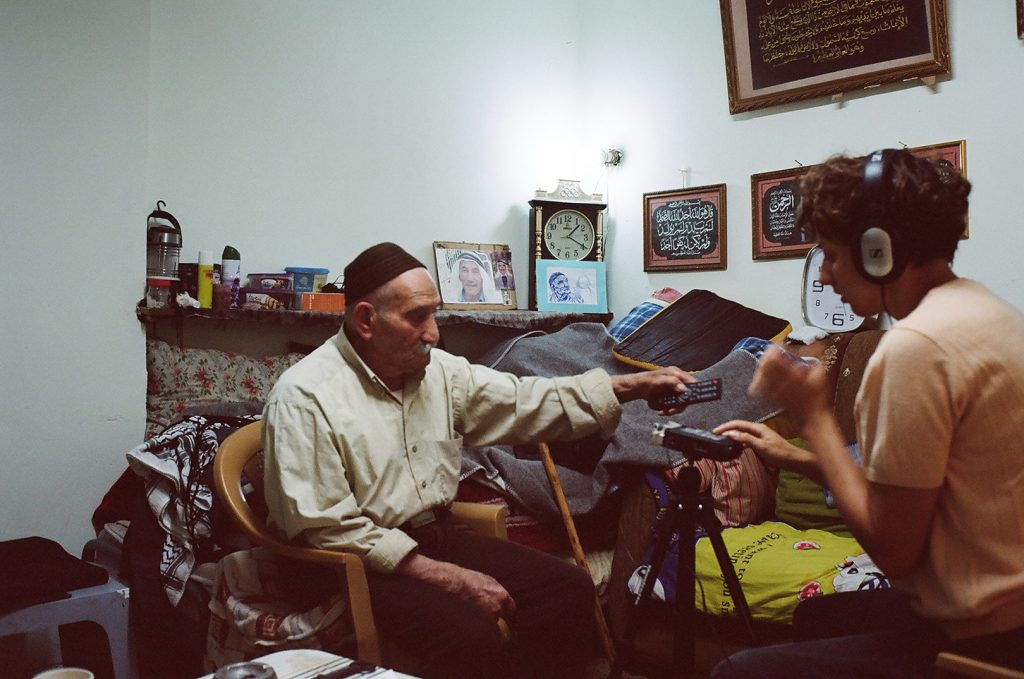
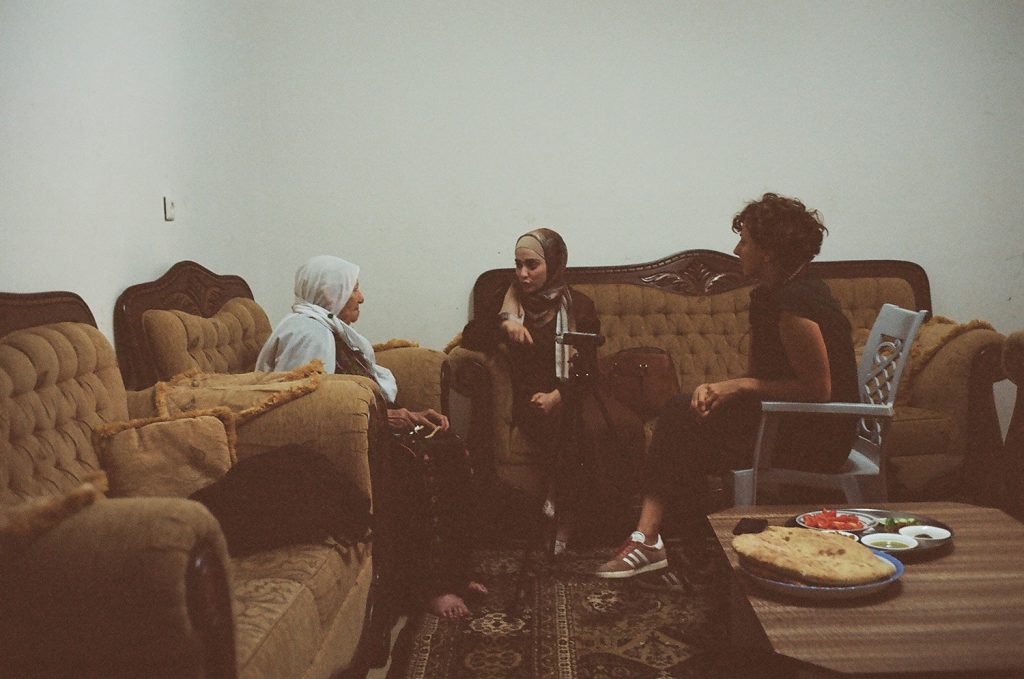
Every song knows its home is a long term project, which aim is to create a soundtrack of exile, by collecting songs sung by the refugees during their wandering as a kind of a grassroots saga: a story that preserves the memory of the harm. Passing from mouth to mouth the memory of home enchanted in songs makes them a substitute for this lost home. Knowing the songs gives a sense of security, it is also a sign of belonging, while breaking the chain of transmission entails the risk of losing the foundations of the community. Moreover, these songs not only preserve erased and suppressed memories, but also their performance often becomes a political act and a form of resistance.
Exhibition
The Camel Never Forgets, Warsaw Gallery Weekend, lokal_30, Warsaw (PL), 2020.
Deep Listening, Contemporary Art Gallery BWA, Katowice (PL), 2019.
Collaboration
Sound mastering: Marcin Lenarczyk
Partners: Akademie Schloss Solitude (Stuttgart), British Library (London), Ujazdowski Castle Centre for Contemporary Art (Warsaw), Ramallah Municipality, Popular Art Centre Al Bireh
Photos: Kuba Rudziński
Installation
12’30” audio recording in a loop, 4 speakers, acoustic panels
Migrants’ muse
The “refugee crisis”, which has been central to media coverage, political rhetoric and reflection on the current condition of Europe for several years now, is still generating its side effects. First and foremost, it places the sources of the crisis in a wrong place, indicating that the refugees are the problem to solve, and not what forces millions of people around the world today to take extremely risky journeys in search of work or shelter against a certain death. If the global system is facing a crisis today, it is not the refugee crisis, but the crisis of capitalism, human rights and climate change. The accumulation of these problems, the increasing helplessness among the world’s powers over their effects – or the lack of political will to intervene – is the real cause of our anxiety.
The ideological dimension of the current discourse also resides in the fact that it creates an illusion that there is something that could be called the “refugee’s identity”, i.e. that there are people whose major characteristic is being a refugee. Especially among right-wing populists, there is a tendency to make the “refugee” a figure of evil or strangeness, a vessel for all possible fears and frustrations, whereas people migrating around the world are at least as diverse as the population of the countries they come to. What they share are not convictions, rituals, beliefs or habits and if they have anything in common, it is – paradoxically – the very migration experience. Paradoxically, because it consists of the loss of identity, getting lost, and harm. Migration requires mourning after losing home and the will to start again in an entirely new environment, which is often alien or hostile. One cannot face the challenges of the present-day without changing our perspective and listening carefully to the experience of exile.
Many contemporary artists have made attempts to get closer to the refugee experience, building in this way an alternative way of political thinking, focused on the crucial aspects of their daily life, rather than immersed in rhetorical duels of clichés and slogans. In her project, Every song knows its home Karolina Grzywnowicz complements the resulting canon of films, photographs and installations with one overlooked aspect. Instead of the visual document of a journey, or its literary recording, she proposes the real soundtrack of exile. She is collecting songs sung by the refugees during their wandering as a kind of a grassroots saga: a story that preserves the memory of the harm. In the grey area of modern law, migrants often hide, disappear. Perhaps this sounds, rhythms and melodies can tell more than images are able to, or for which there is no proper image in our age anymore. In this sense, Grzywnowicz tries to create the conditions for a direct contact with the migrants’ muse: astray, displaced and wounded just like them.
However, one cannot talk about the experience of exile by limiting her- or himself only to its current dimension, as if the migration arose after mass media got interested in it. It has a long history, just as long as the history of social injustice is, in every part of the world and every era. Karolina Grzywnowicz is aware of this, which is why her sound archive moves towards various time and space dimensions: one can hear there songs of Ukrainians and Lemkos displaced after the war, rap songs of refugees from war-torn Syria, or songs sung by refugees from West Africa. There is a real histories’ montage (of stories, memories, traditions), and the History itself as a montage. This is why, every overheard melody, every hummed alone song can come out as a part of the whole, as a “fragment of the tradition of the oppressed”, the teaching of which – as described by Walter Benjamin – is essential to prevent inevitable catastrophes in the future.