Distillates
Poisons and medicine are oftentimes the same
substance given with different intents.
— Peter Mere Latham
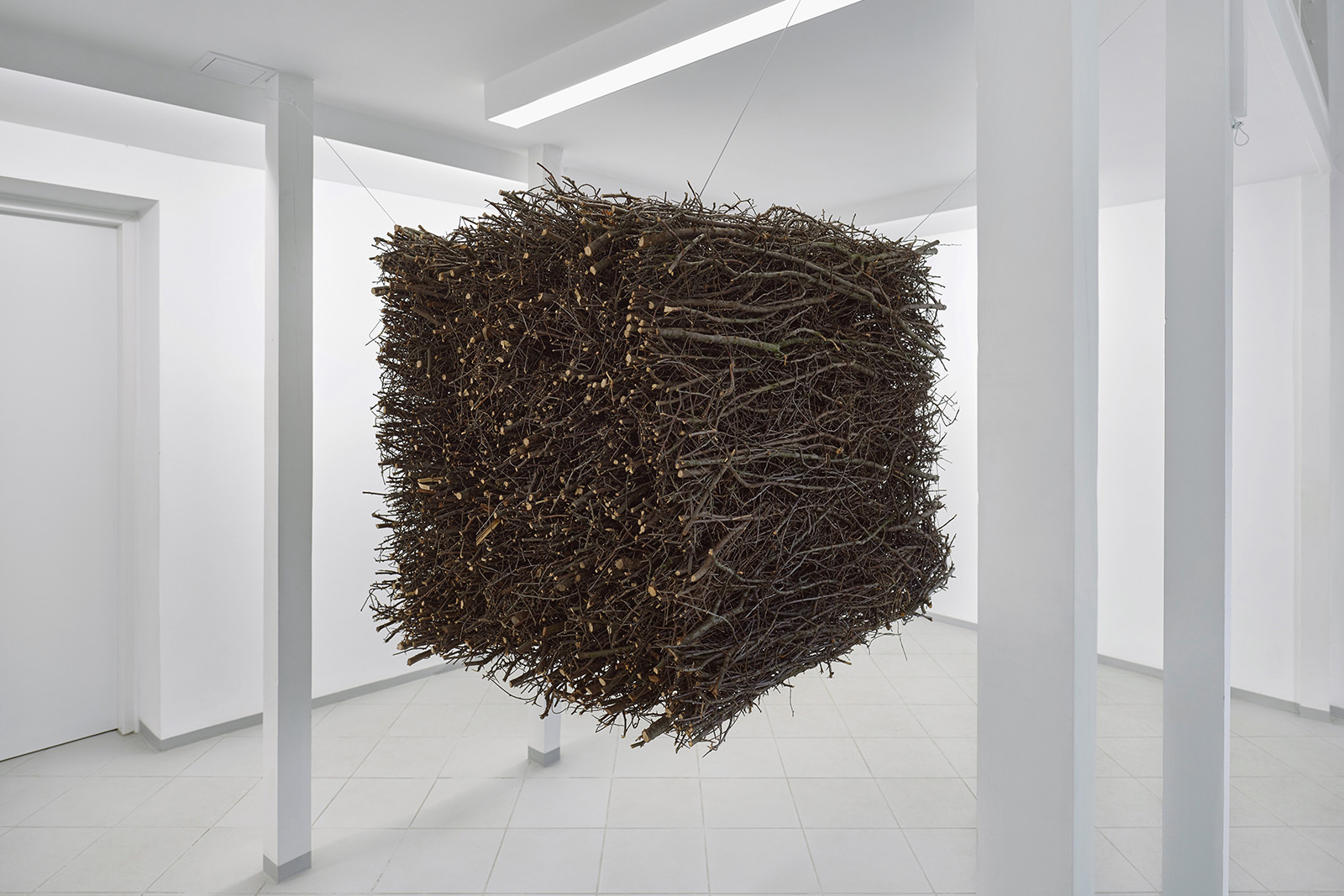
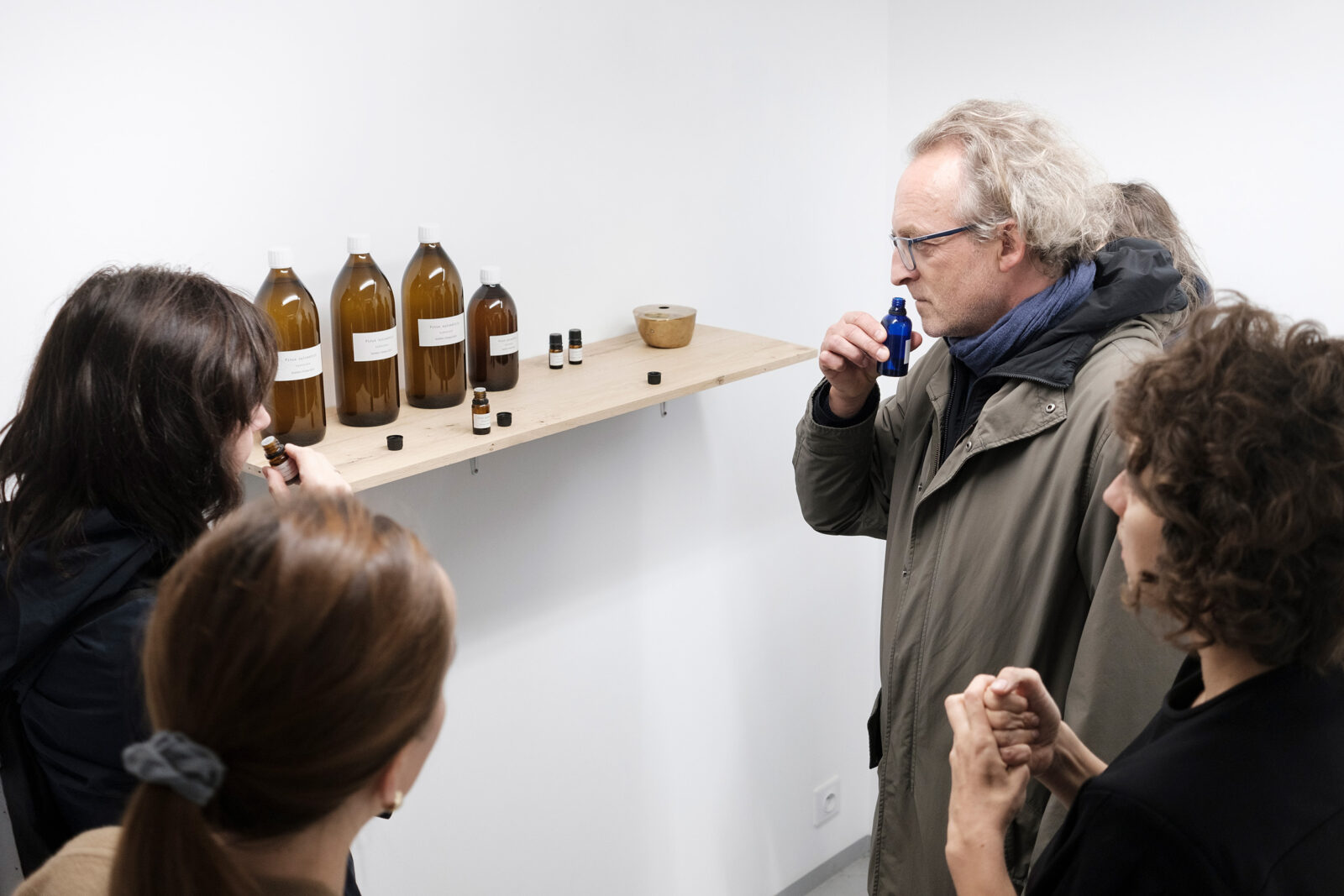
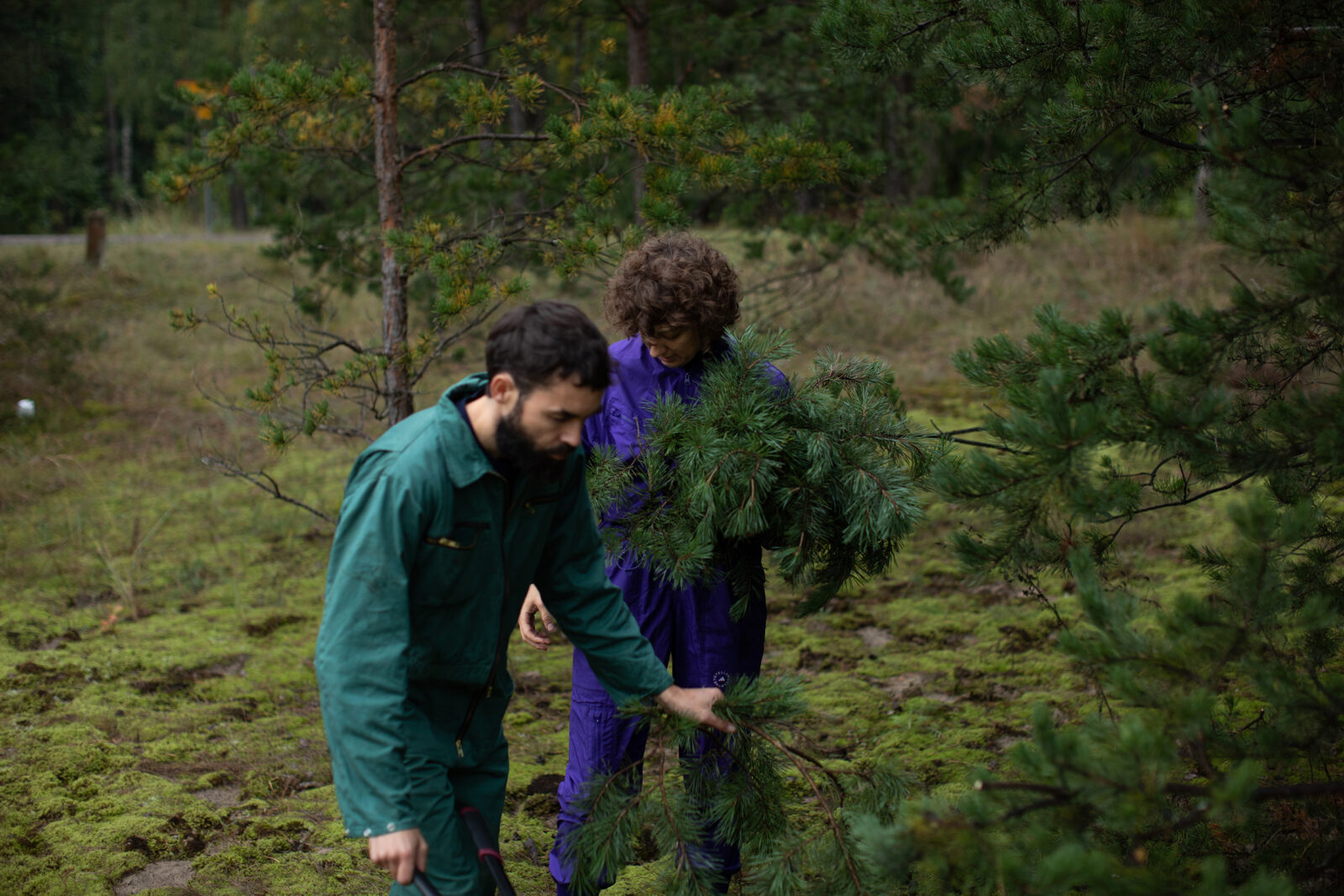
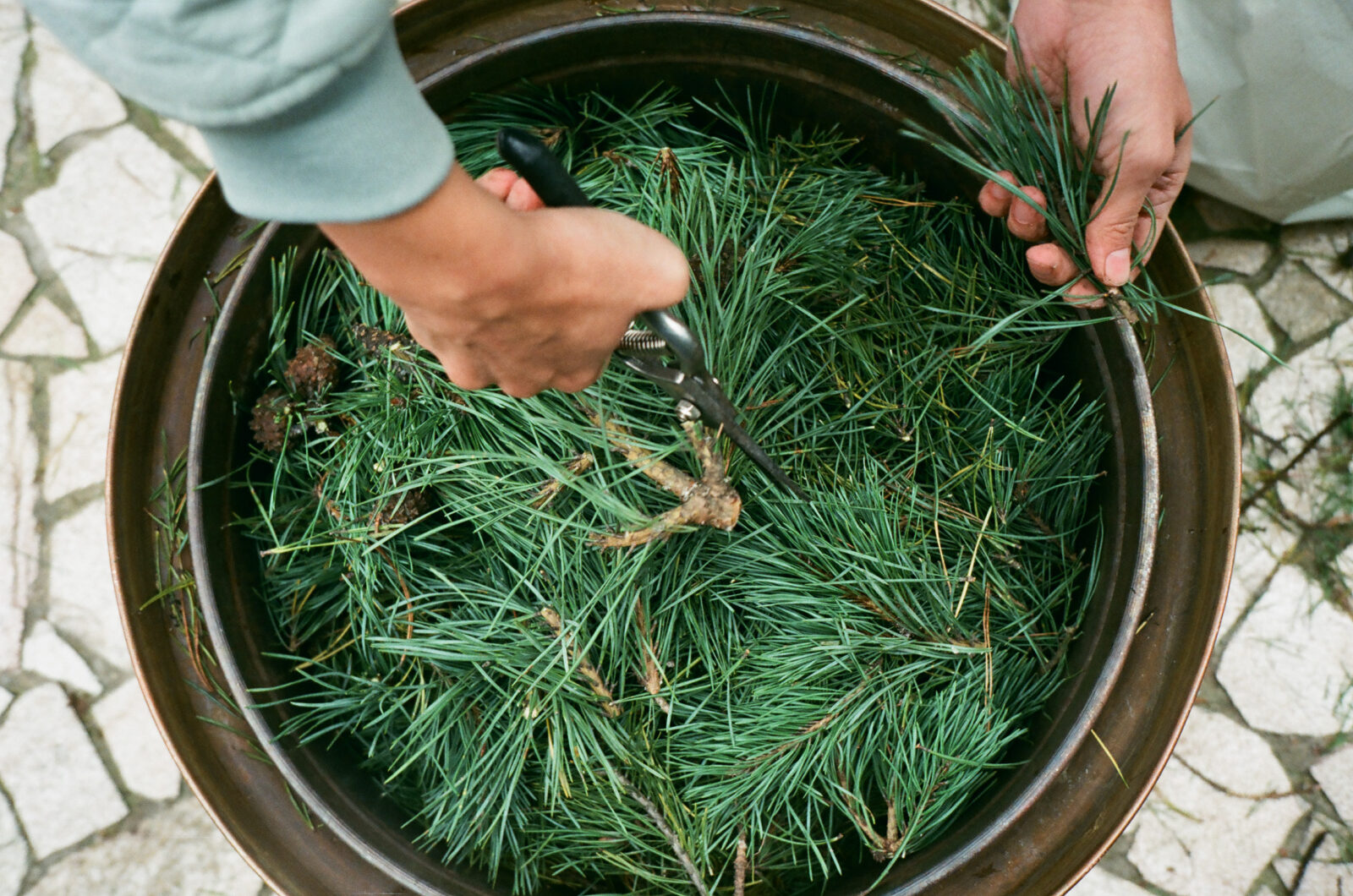
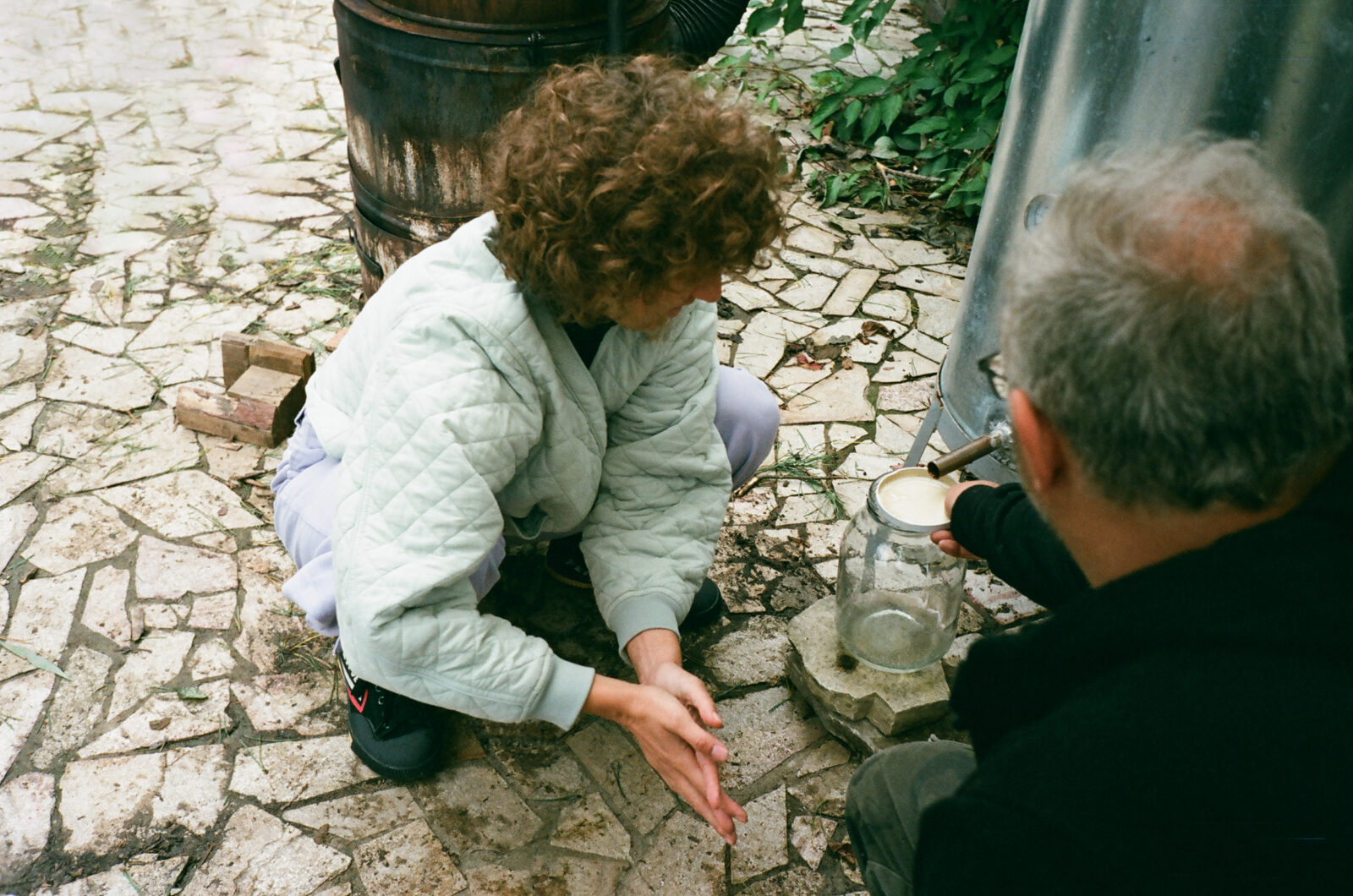
The political and the intimate are most strongly intertwined with the senses, especially the sense of smell, around which the Distillates project is centred. Together with local partners, Karolina Grzywnowicz produces medicinal essential oils from plants used as a camouflage and colonisation tool. The olfactory installation – offering an embodied, emotional and reflective experience – tells the story of what was to be erased and uprooted.
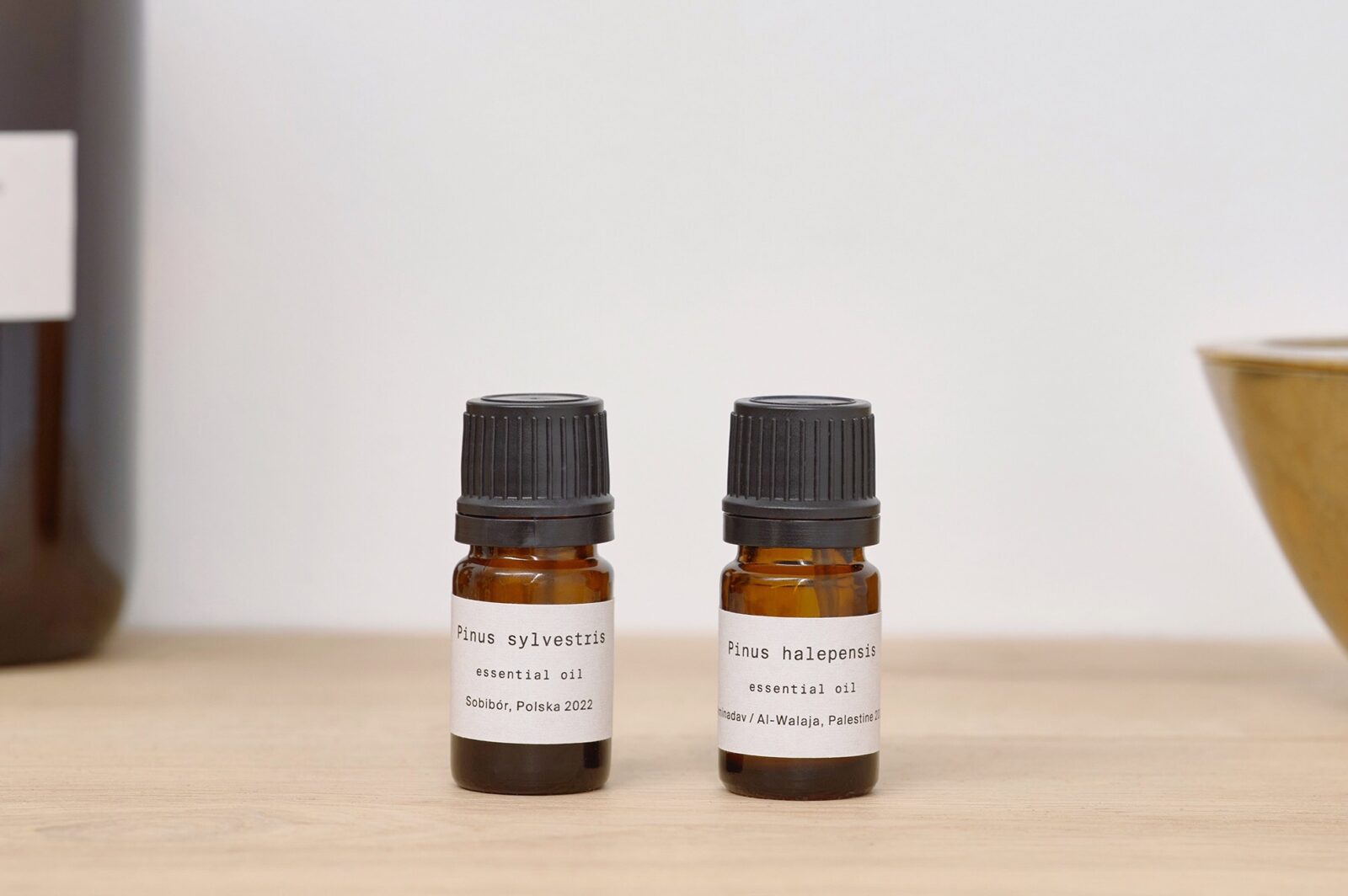
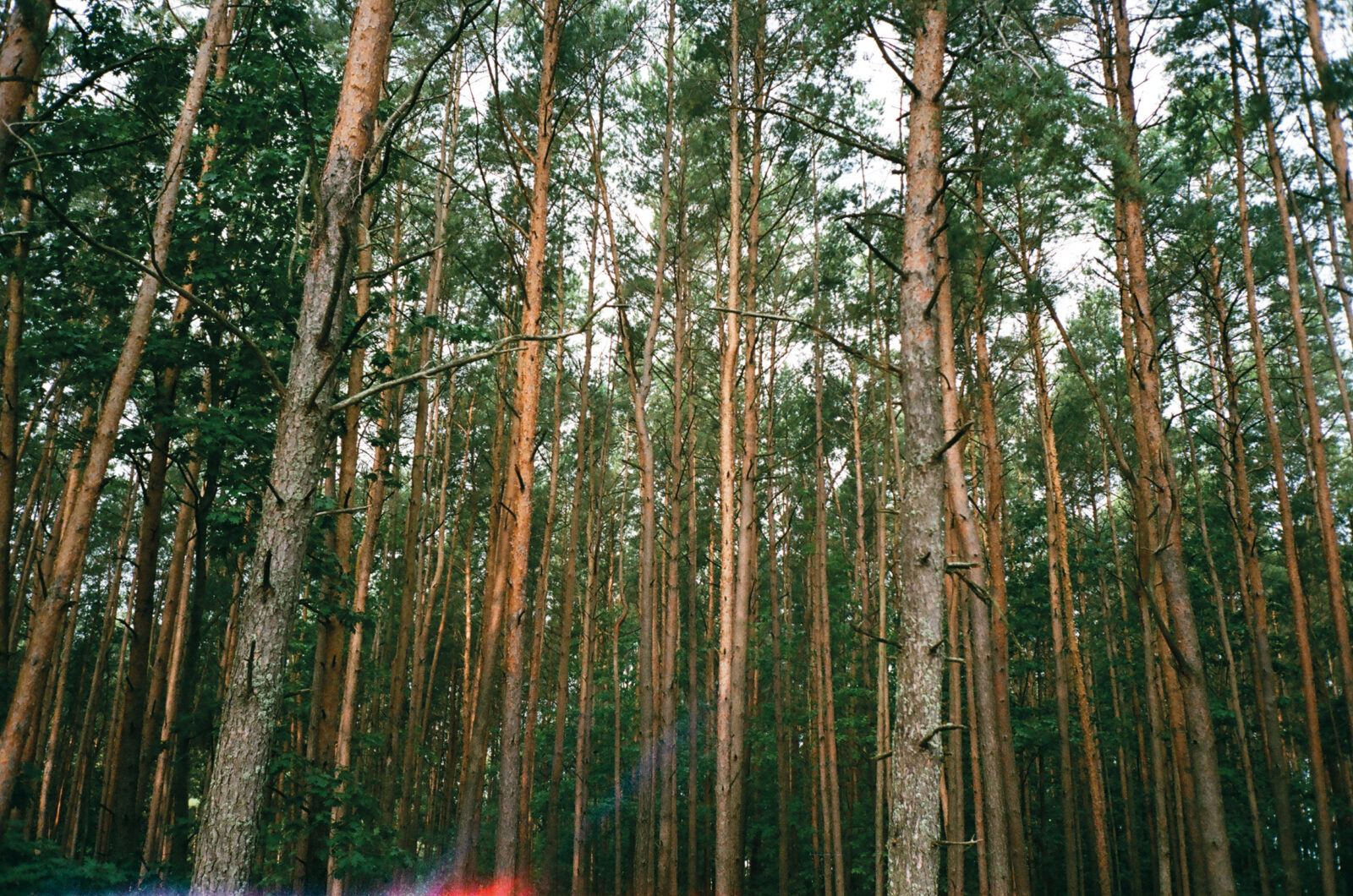
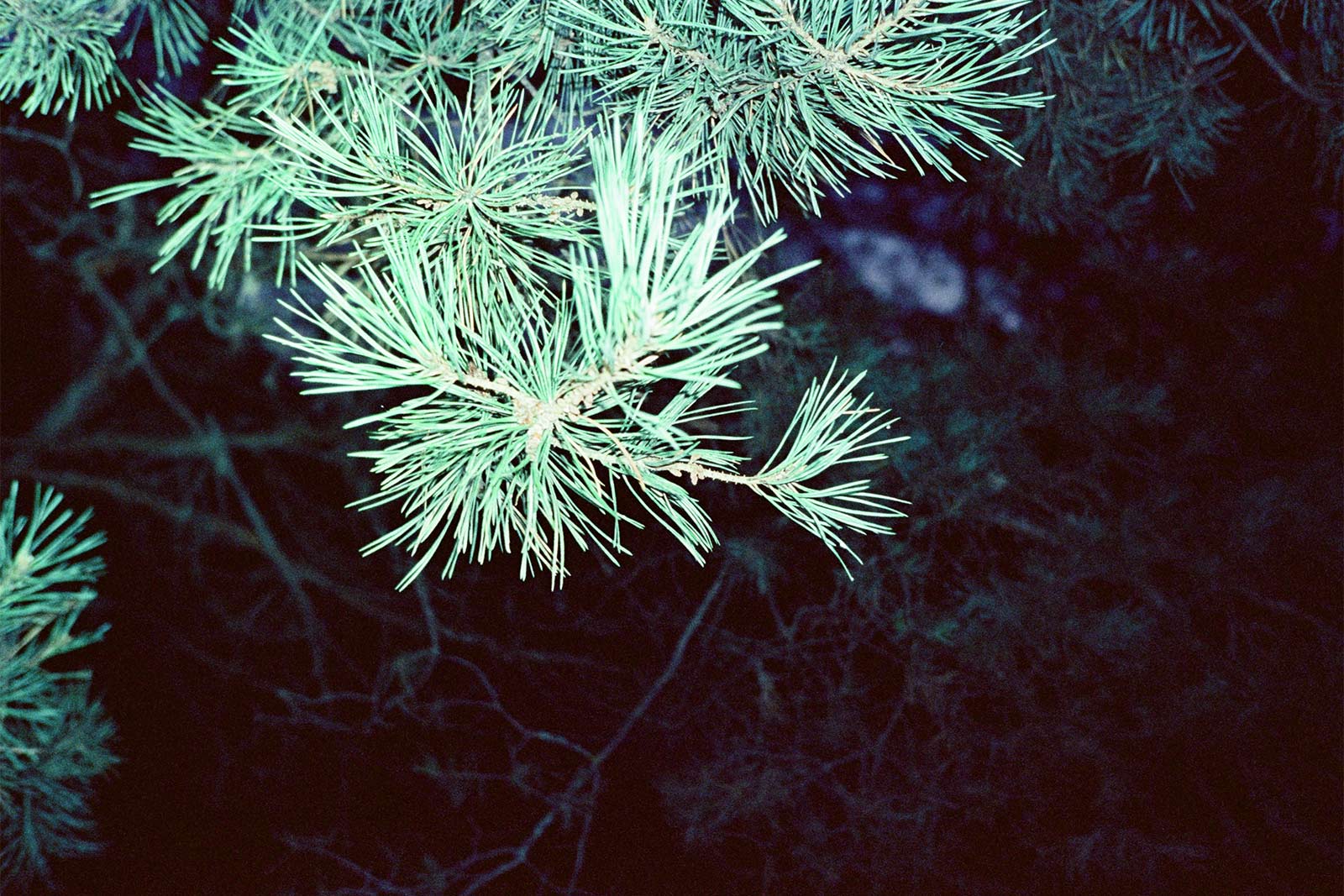
The first chapter of this project is devoted to pine trees. Due to their widespread occurrence in Eastern Europe and fast growth, pines were used by the Nazis to conceal concentration camps in Poland. At Sobibor, Treblinka and Belzec, after the demolition of camps’ buildings young pine trees were planted to completely cover the traces of the crime. Planting pine trees was also a part of the Zionist plan to transform the historic landscape of Palestine to take away its indigenous and give it an eastern European character, in order to encourage Jews to settle in Palestine. Since 1948, Israel has planted more than 250 million pine trees to camouflage razed Palestinian villages.
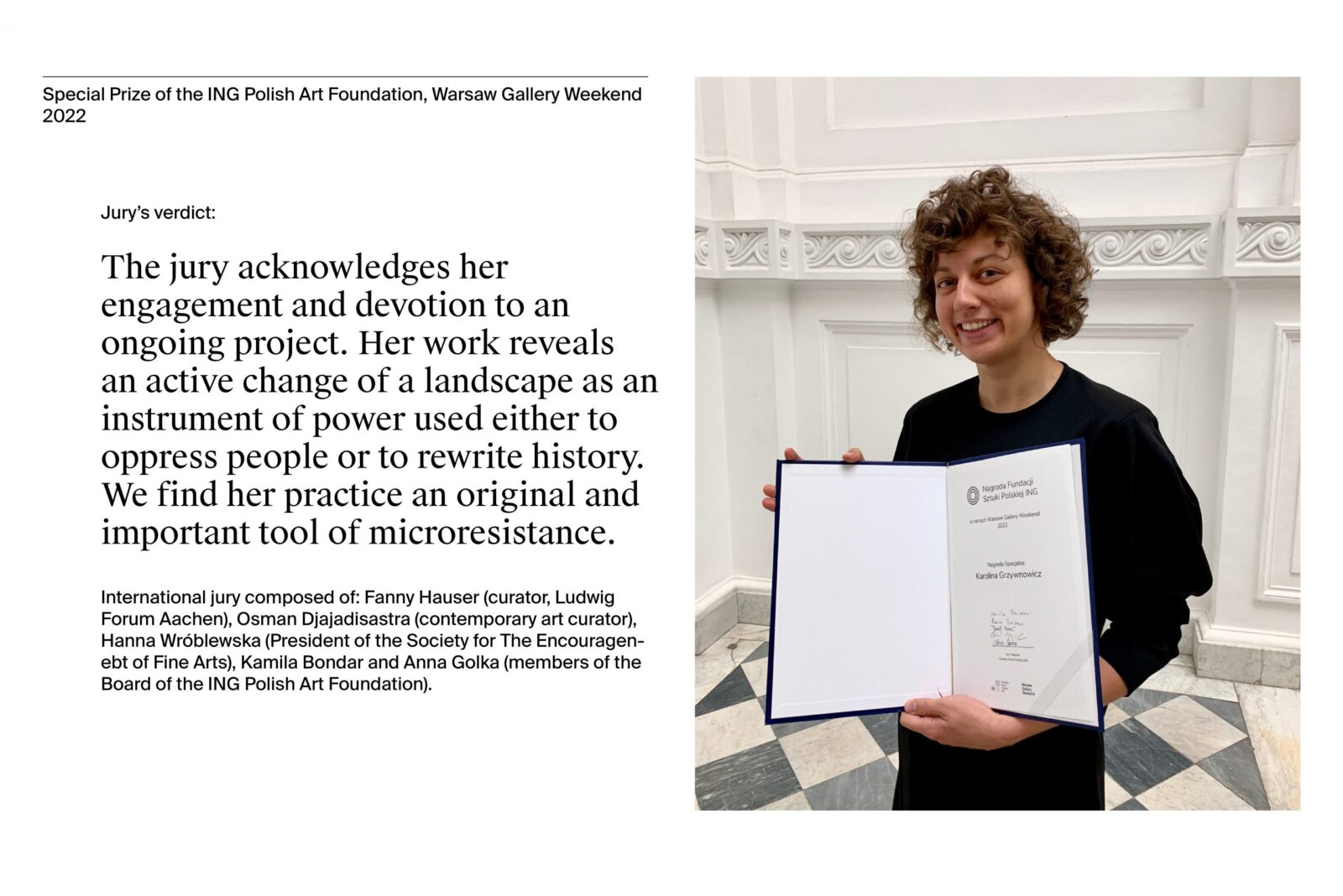
Special Prize of the Warsaw Gallery Weekend and ING Polish Art Foundation.
Exhibition
Grounding, Jednostka Gallery, Warsaw (PL), 2022
Collaboration
Essential oil distillation: Paweł Piasecki / Destylarnia Olejków Eterycznych; Abed Alami
Herbalist: Barbara Błażyca-Szczerbowska
Production: Kuba Rudziński
Technician: Krzysztof Tęcza
Photos: Bartosz Górka, Kuba Rudziński, Filip Skrońc, Grzegorz Wełnicki
Graphic design: Studio Lekko
Installation
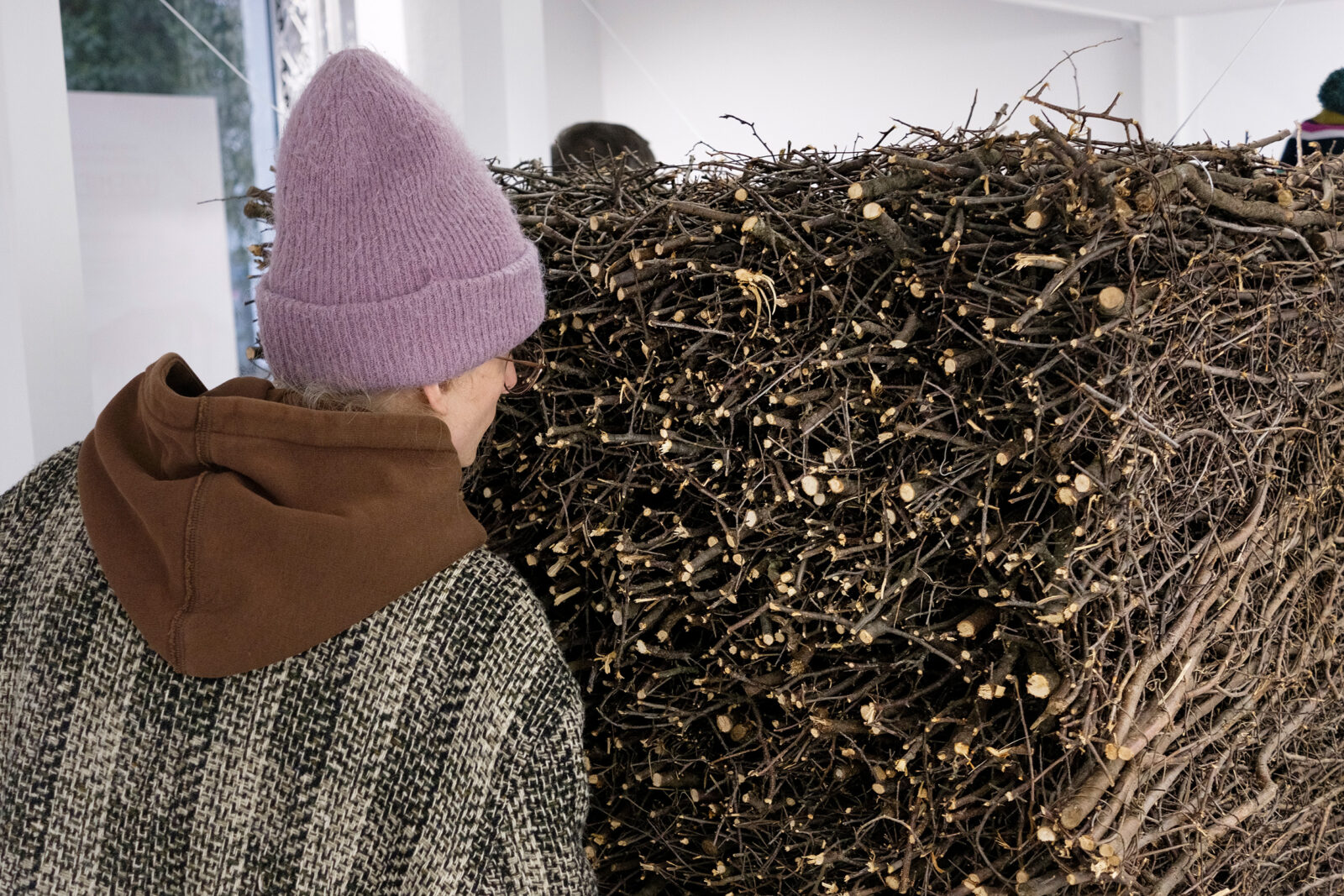
Olfactory installation: blackthorn module 100 x 100 x 100cm
Essential oils: Pinus sylvestris, Sobibór (PL), Pinus halepensis, Sar’a (PS)
Collages: 31 x 23 cm
The Smell of Resistance
Landscape has long been a tool of ideology and power, or more precisely, a medium for the projection and realisation of the imperial imagination. Every act of colonial appropriation deprived those conquered not only of political and cultural freedom but it also robbed them of sensory experience and subjugated them to the dictates of the colonisers. Imperial plunder was not just limited to the natural resources integral in the production and consumption of goods, but also included what and how one could see, hear or feel. The ruins of empire consist equally of destroyed houses and the looting of images, sounds, tastes and smells. It is a holistic theft of an environment, imprinting itself on the most bodily and intimate deficiencies. The remnants of colonial violence are thus damaged peoples left in a sensory desert, unable to feel what was once their natural environment, a world tamed; experienced spontaneously ‘by feel’.
Karolina Grzywnowicz’s new project focuses on the politics of planting and the ways in which territories are marked. The artist is interested in ‘contaminated landscapes’ and the plants that have been used to camouflage sites of violence. Colonial power not only destroys the habitat of subjugated peoples, but also creates a new one; it produces a surrogate environment, a scenography subordinated to the new regime that masks its violence.
The political and the intimate intersect most powerfully with each other in the senses, especially the sense of smell, around which this project is centred. As old and new philosophies, together with contemporary psychiatry have shown the olfactory system retains the traces that are most deeply embedded in memory and that activate it most quickly. It is in smells that both lost lives and the weight of colonial oppression are involuntarily manifested. It can become a tool of oppression, but also a means of combating it, a sense of resistance. Grzywnowicz therefore decided to produce medicinal fragrance oils based on plants used by oppressors to cover up their crimes. These will be exportable commodities in which political violence will be deactivated and reoriented in the ephemeral medium of scent. It will preserve the memory of what this violence was meant to erase and eradicate.
Colonised peoples subjected to imperial invasion become sensitised to their own landscape. Therefore, one possible practice of resistance is to desensitise the victims of violence, to rebalance their senses. By the same measure, however, witnesses can and must be re-sensitised to remember the injustices that the environmental masquerade of imperial projects was in principle meant to conceal. In the end, the point is that violence can be replaced by tenderness, and its new incarnations of oppression can be sensed at once, precisely, like a nostril-irritating scent. This project aims high and at the same time clings to what is most intimate, most ephemeral, most difficult to name. In this way, it wants to give back to others the possibility of experiencing a shared world in their own way.